Energy and Decarbonisation
Energy and decarbonisation play a central role in the Australia-Korea bilateral relationship, supporting energy security, industrial competitiveness, emissions reduction, and long-term economic cooperation. Both Australia and Korea have committed to achieving net zero emissions by 2050, creating significant opportunities for long-term collaboration across clean energy, low-emissions technologies, and industrial decarbonisation.
5th Australia-Korea New Energy Forum, Melbourne (2024)
Australia is Korea’s largest supplier of LNG, while Korea is one of Australia’s major suppliers of refined petroleum products and diesel. With Korea importing more than 90% of its energy needs due to limited domestic energy resources, secure and reliable energy partnerships are critical to the Korean economy. Recent global fuel supply disruptions and geopolitical tensions have further reinforced the importance of the Australia-Korea energy partnership and the need for resilient and diversified energy supply chains.
As both countries accelerate the energy transition, cooperation continues to deepen across LNG, renewable energy, hydrogen, ammonia, CCUS, battery energy storage systems (BESS), and industrial decarbonisation. The Australia-Korea Green Economy Partnership Arrangement on Climate and Energy, signed in 2024, further strengthened collaboration across clean energy technologies, emissions reduction, energy transition, and future energy industries. Australia’s abundant natural resources and renewable energy potential complement Korea’s advanced manufacturing, shipbuilding, engineering, and energy technology capabilities.
Recent activities
Hosted the Canberra Leadership Summit sessions on “Energy Transition and Cross-Border Cooperation” with the Hon Chris Bowen MP, Minister for Climate Change and Energy, and “Pathway for Australia’s Energy Transition to 2050” with the Hon Dan Tehan MP, Shadow Minister for Energy and Emissions Reduction (2026)
Hosted the Energy Transition and Decarbonisation Roundtable as part of the 46th KABC-AKBC Joint Meeting in Seoul (2025)
Co-hosted the 6th Australia-Korea New Energy Forum with the Embassy of the Republic of Korea and the Invest Victoria (2025)
Hosted AKBC Energy Industry Group meetings focused on energy transition, decarbonisation, and Australia-Korea collaboration opportunities (2025)
Co-hosted the 5th Australia-Korea New Energy Forum with the Embassy of the Republic of Korea and the Ministry of Environment (2024)
Hosted the Australia-Korea CCUS Networking Event focused on carbon capture, utilisation, and storage collaboration opportunities (2024)
Led the Chairman’s Energy Transition and Decarbonisation Delegation to Korea involving engagement with Korean government agencies, energy companies, and industry stakeholders (2024)
Published the report “Mapping the Australia-Korea Hydrogen Intersections,” highlighting strategic opportunities for bilateral hydrogen and clean energy cooperation (2022)
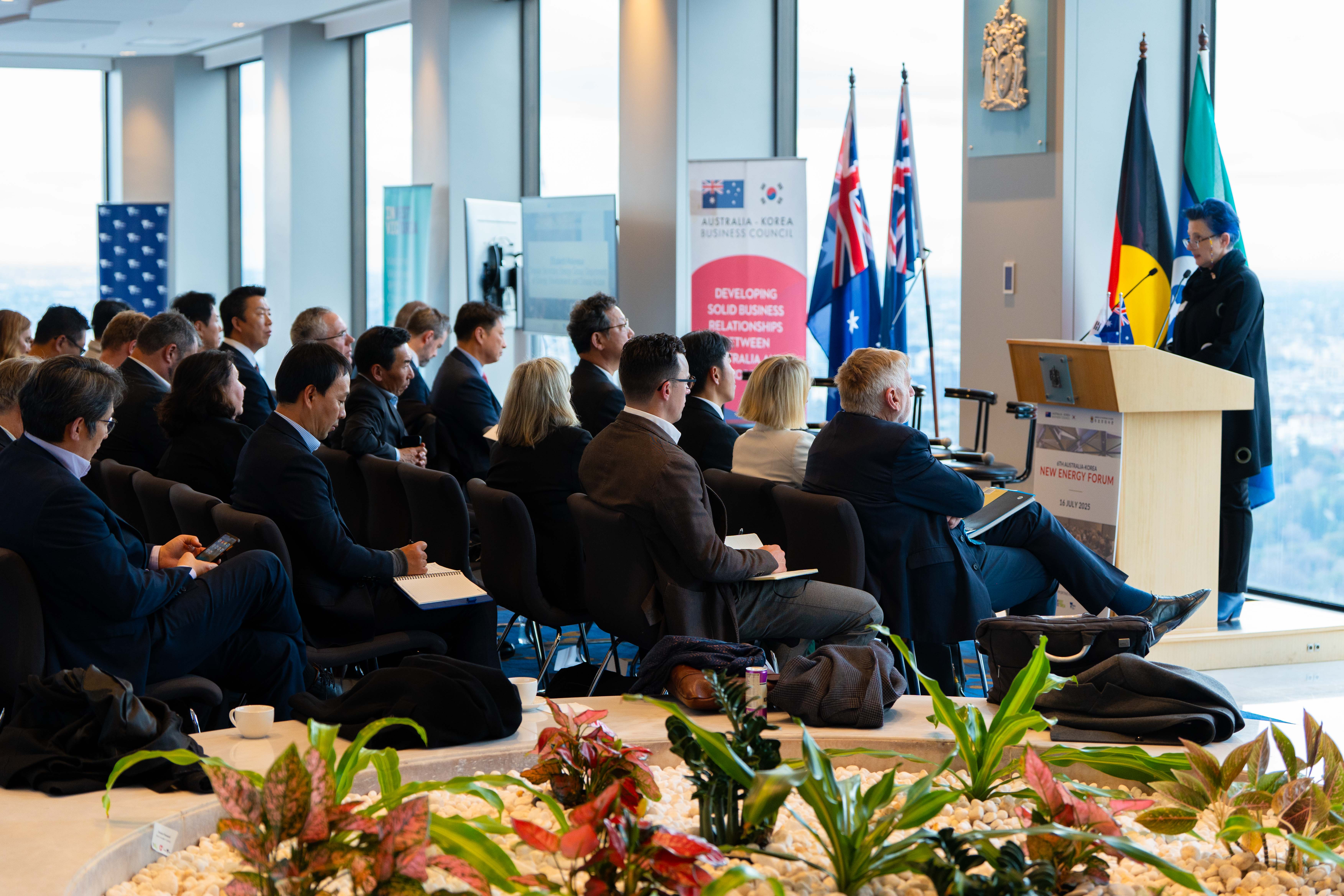
6th Australia-Korea New Energy Forum
Why join
Energy cooperation is critical to both countries’ economic security and transition goals. As Australia and Korea continue strengthening collaboration across LNG, hydrogen, clean energy, CCUS, storage, and industrial decarbonisation, there are growing opportunities for investment, technology partnerships, supply chain cooperation, and long-term strategic engagement across the Australia-Korea energy sector.
Click here to join AKBC as a member.